<Figure size 960x480 with 0 Axes>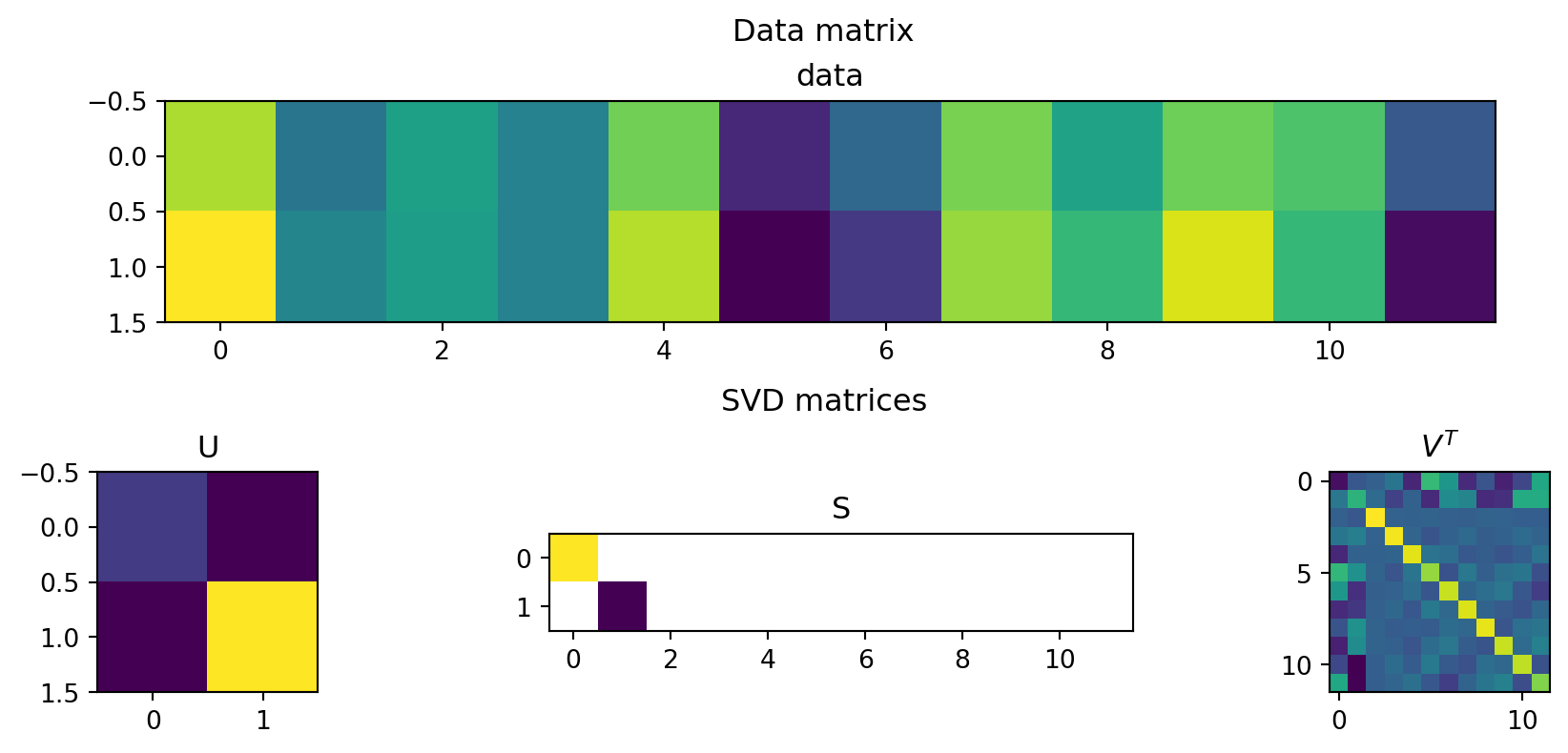
A^T= \begin{bmatrix} 2.9 & -1.5 & 0.1 & -1.0 & 2.1 & -4.0 & -2.0 & 2.2 & 0.2 & 2.0 & 1.5 & -2.5 \\ 4.0 & -0.9 & 0.0 & -1.0 & 3.0 & -5.0 & -3.5 & 2.6 & 1.0 & 3.5 & 1.0 & -4.7 \end{bmatrix}
Each column represents one person:
\begin{bmatrix} \text{height} \\ \text{weight} \end{bmatrix}.
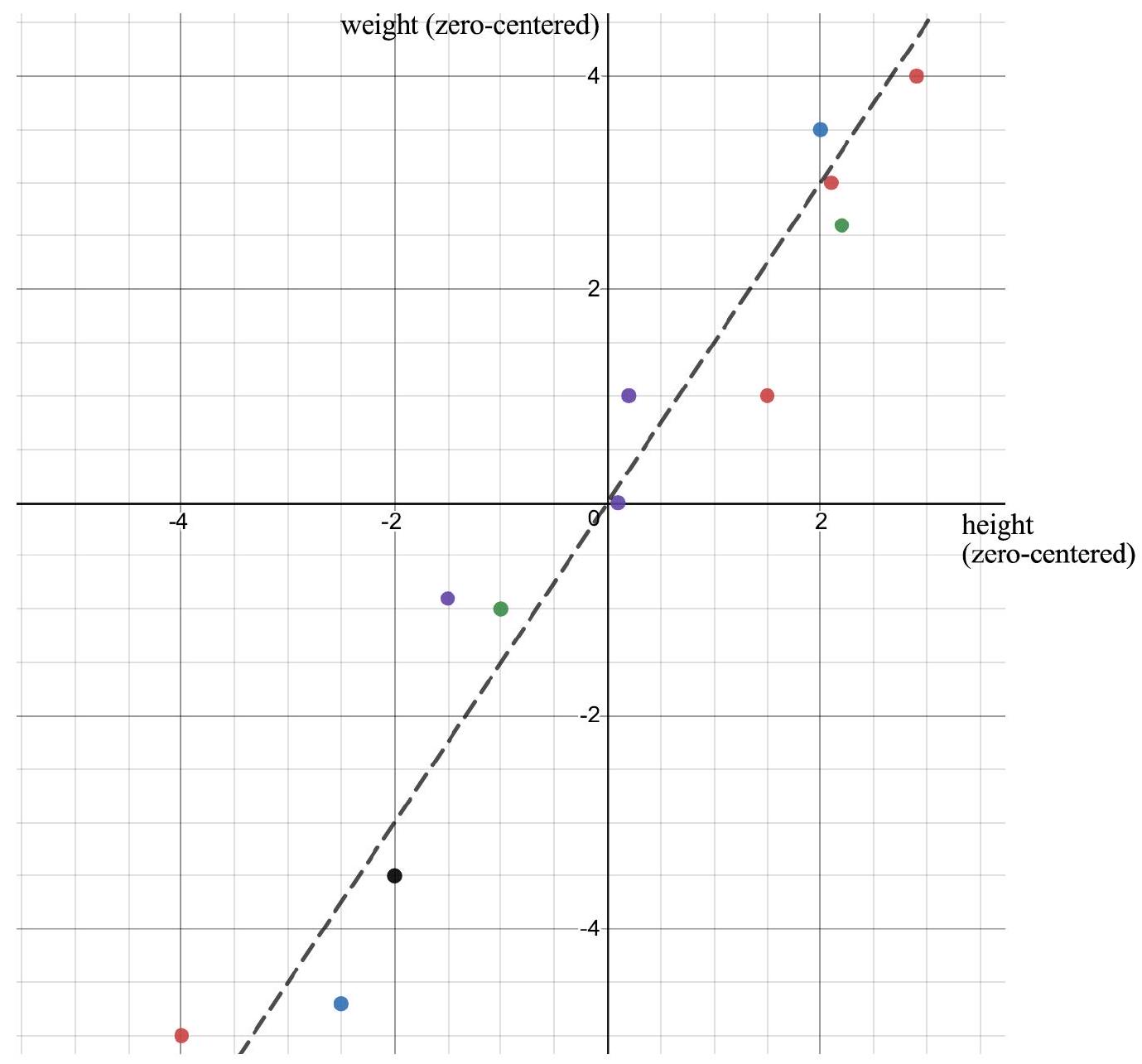
<Figure size 960x480 with 0 Axes>
The columns of U live in height–weight space.
Each column u_i is a direction that can be drawn directly on the scatterplot.
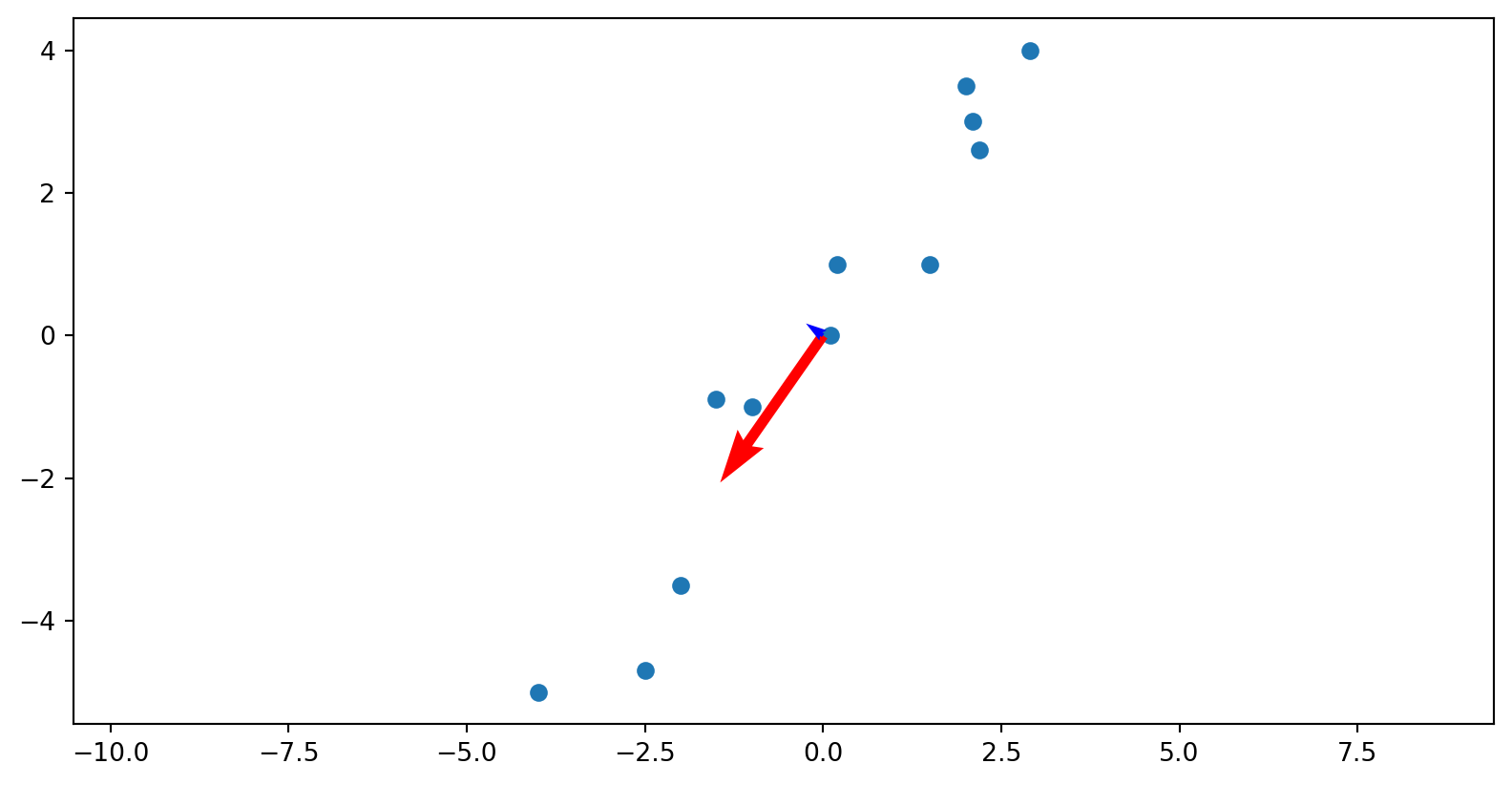
Each vector u_i answers:
If the data vary according to one underlying pattern, how do the measurements change?
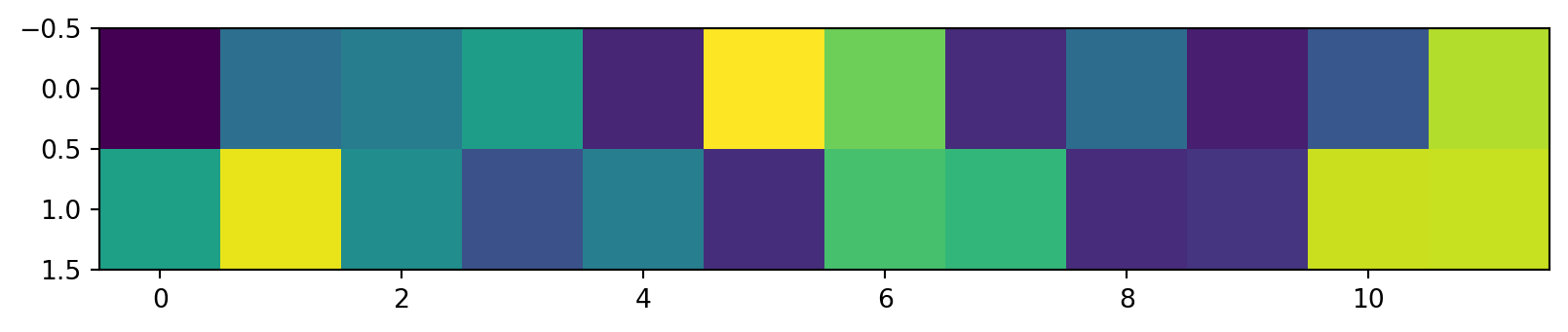
Typical interpretation:
u_1: height and weight increase together → overall body size direction.
u_2: height increases while weight decreases (or vice versa) → body proportion differences.
So U provides an orthogonal coordinate system describing how measurements change.
The matrix V lives in person space.
Each column v_i assigns a number to every person.
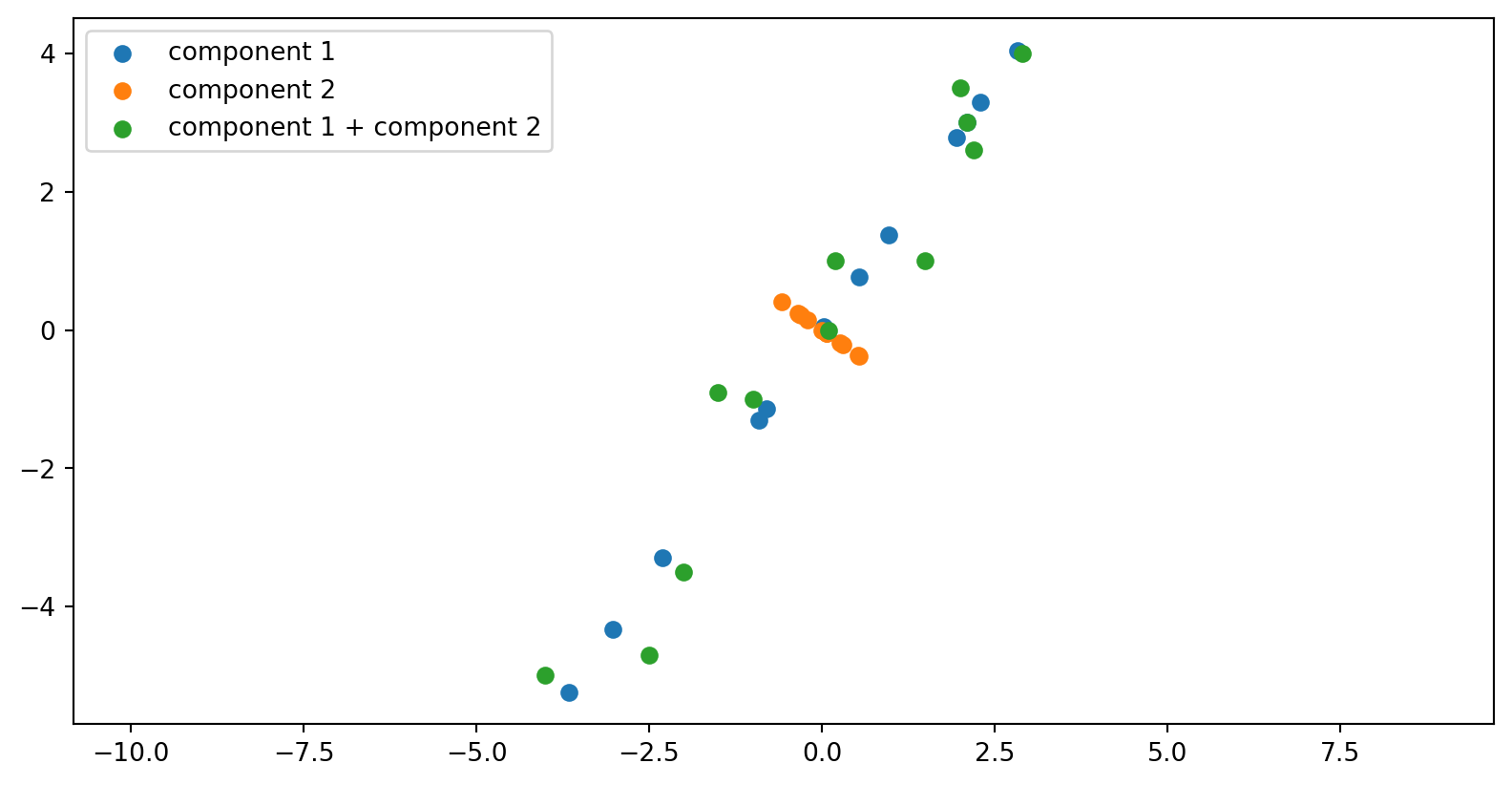
Each vector v_i tells us:
which people participate in a particular pattern of variation.
Interpretation:
Examples:
Because measurements live in a 2-dimensional space (height and weight), only two independent population patterns are needed.
Using the first two rows of V^T, scaled by the singular values and rotated by U:
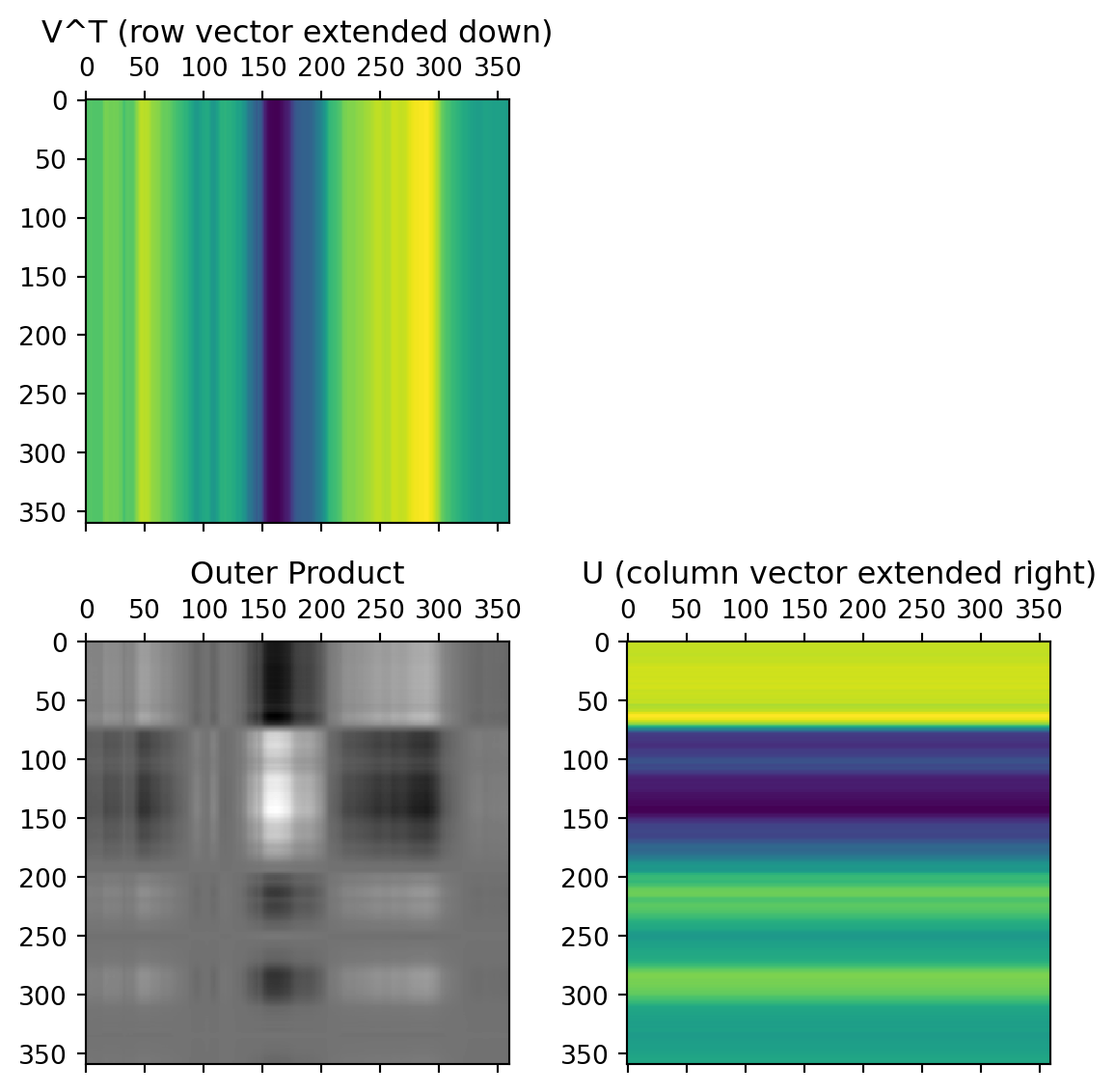
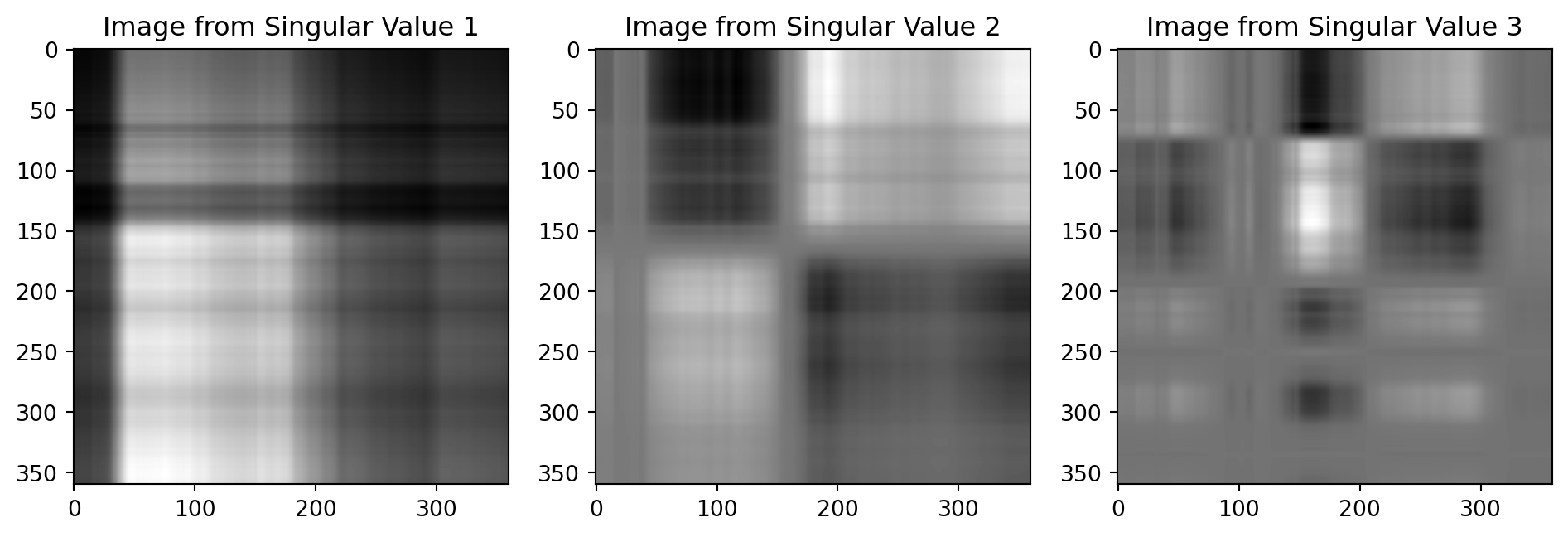
Each term of the SVD
A = U S V^\mathsf{T}
can be written as
A = \sigma_1 u_1 v_1^\mathsf{T} + \dots + \sigma_r u_r v_r^\mathsf{T}.
Each component means:
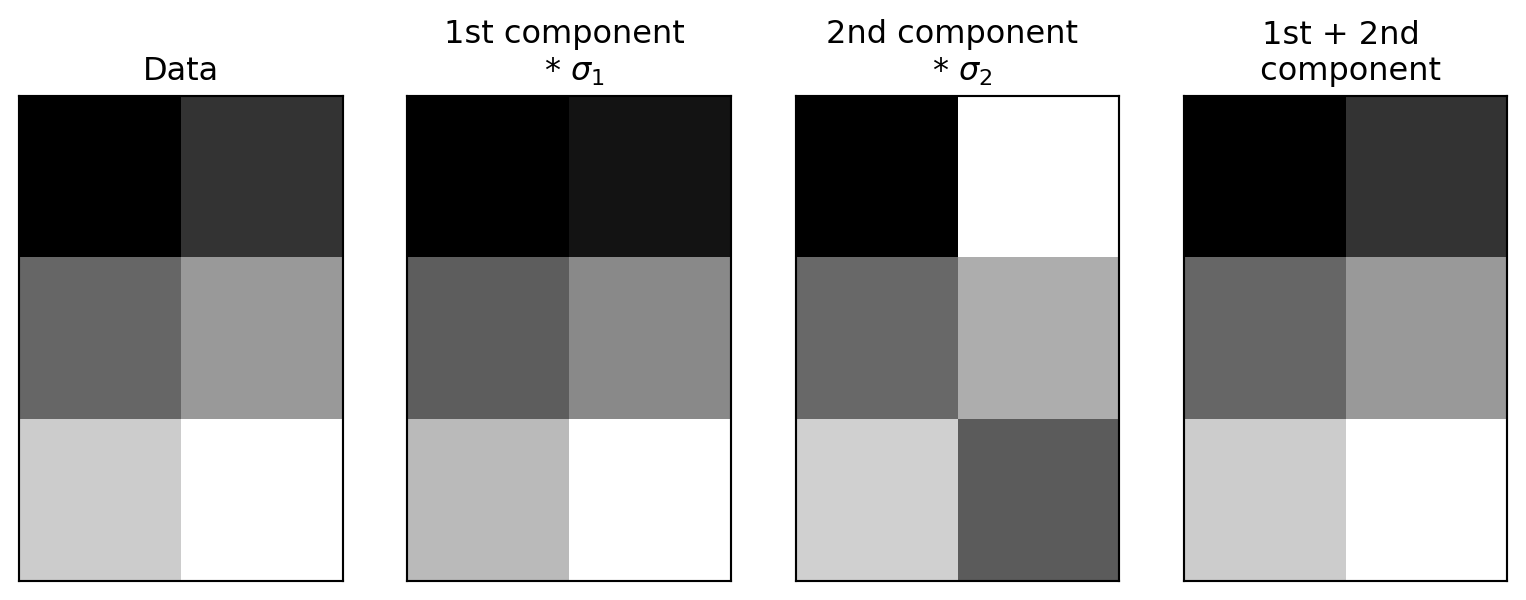
How much of the variance is captured by the first two components?
The variance captured by each component is the sum of the squares of the singular values divided by the sum of the squares of all the singular values.
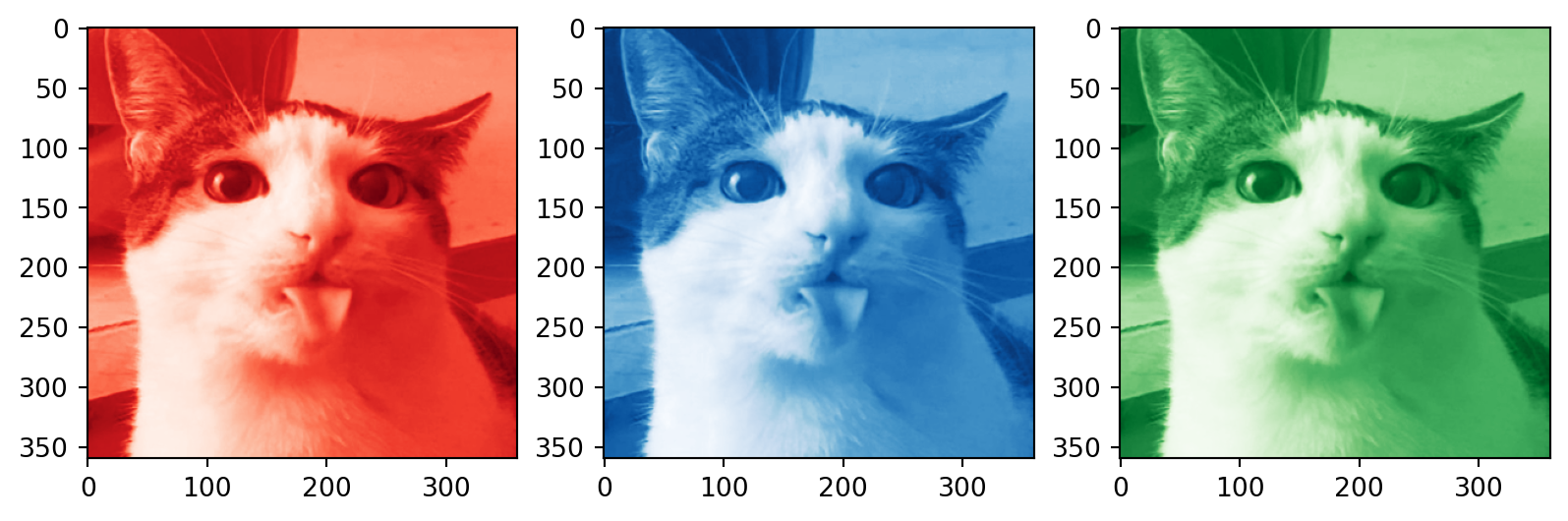
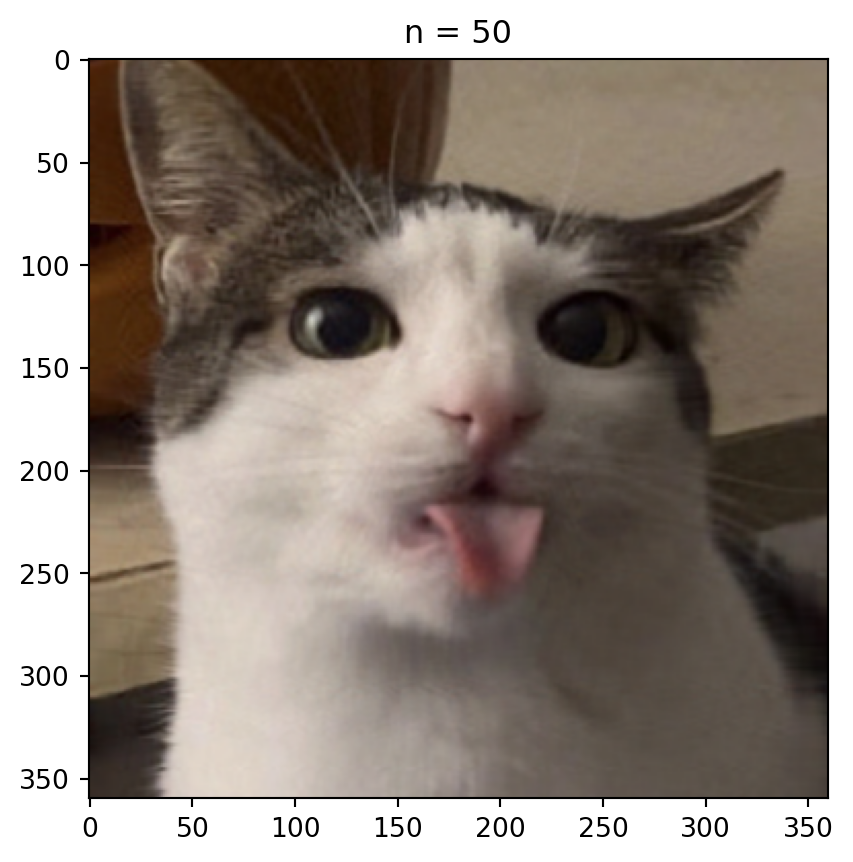
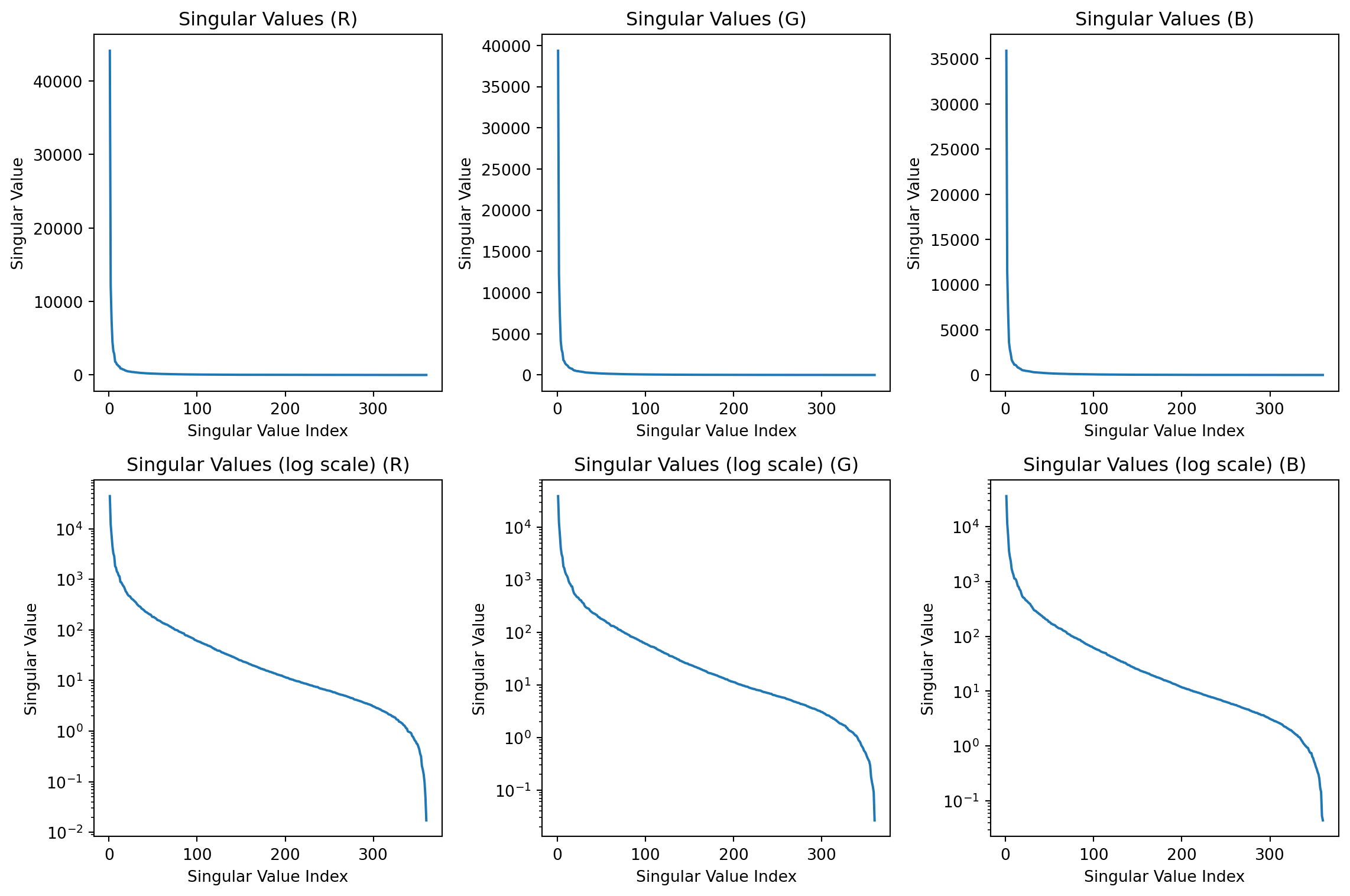
# SVD for each channel
U_R, S_R, Vt_R = np.linalg.svd(R, full_matrices=False)
U_G, S_G, Vt_G = np.linalg.svd(G, full_matrices=False)
U_B, S_B, Vt_B = np.linalg.svd(B, full_matrices=False)

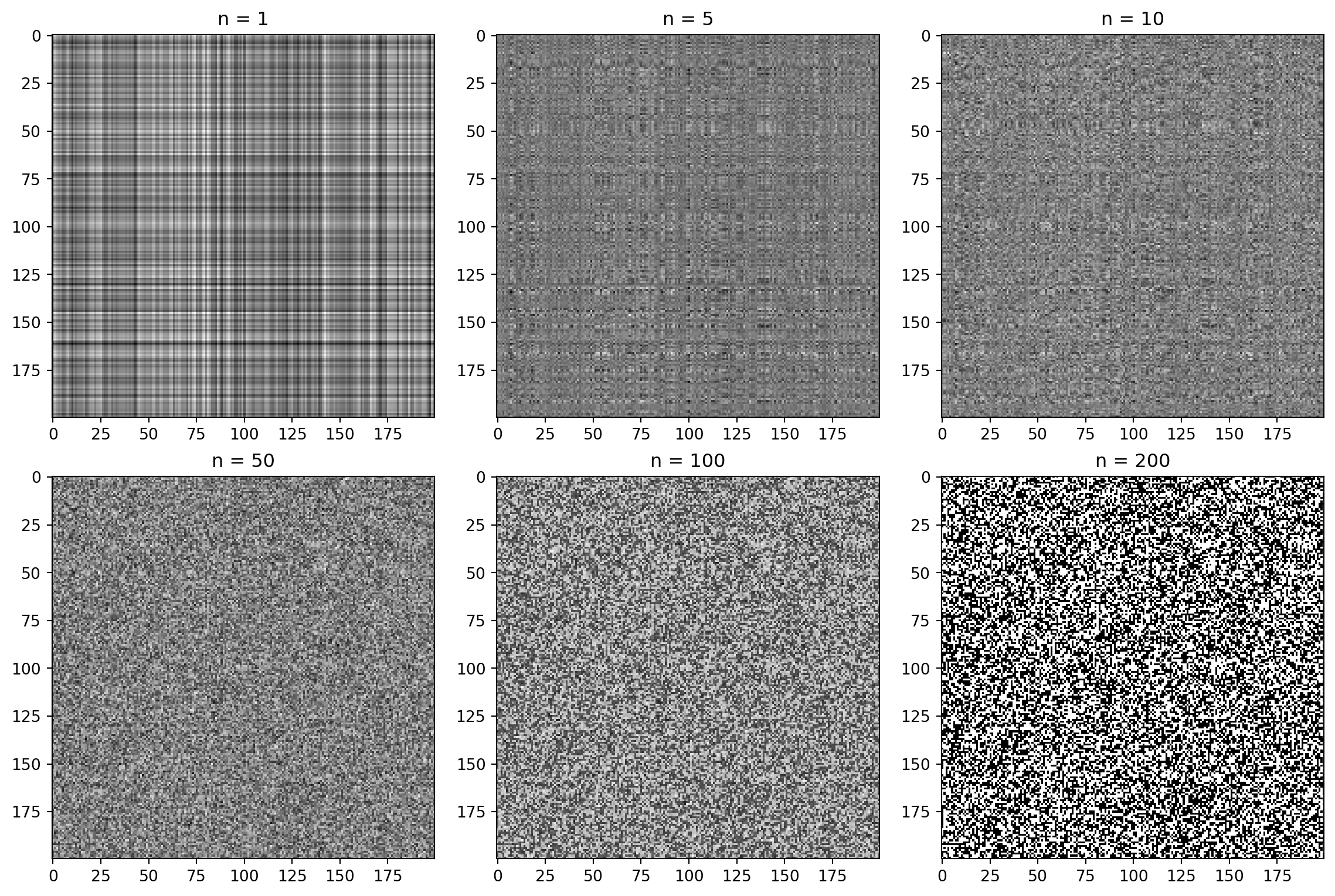
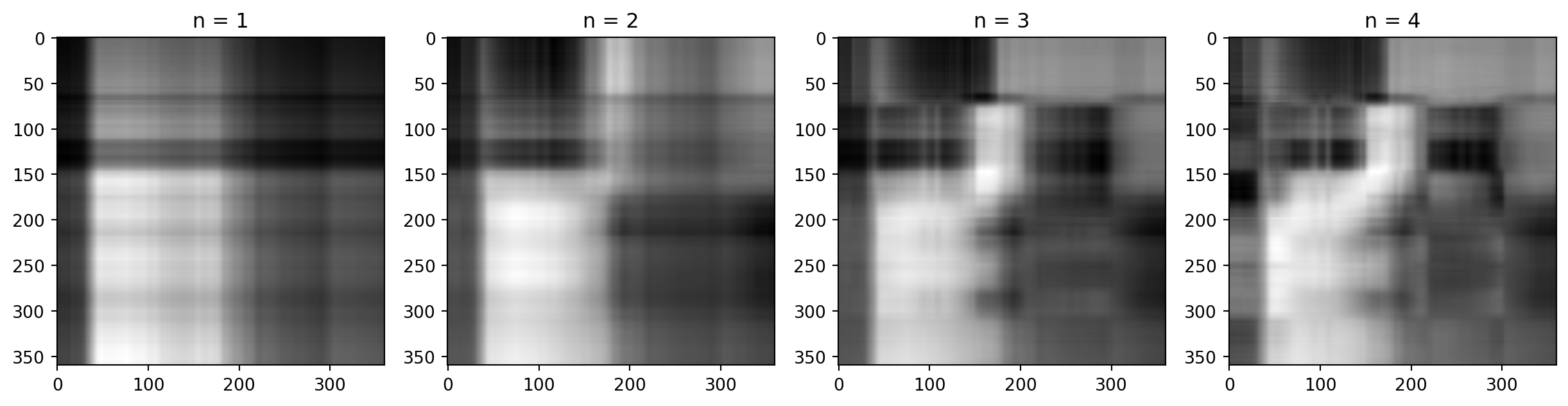
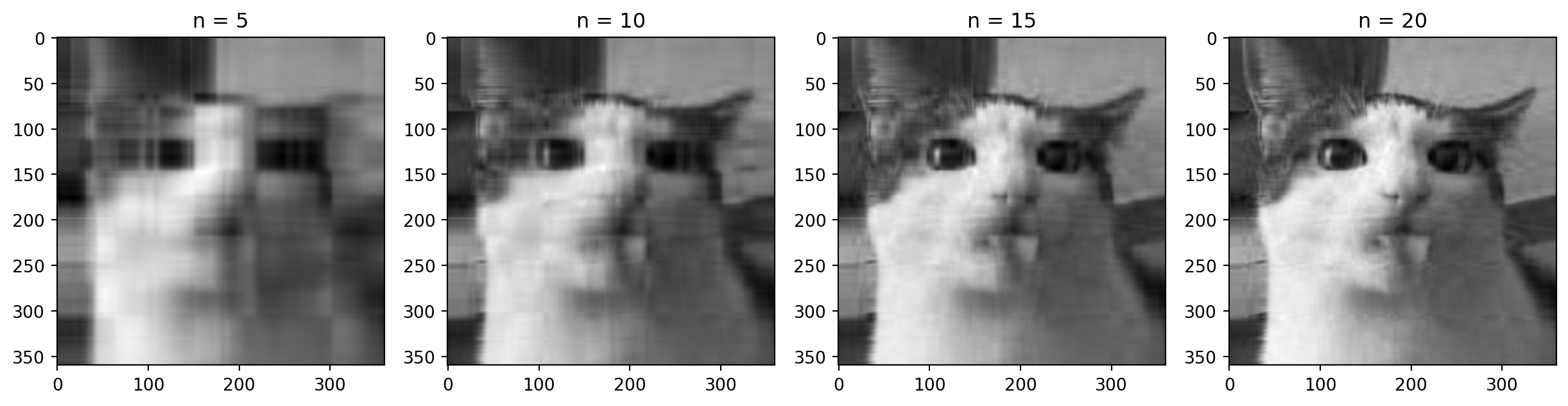
n = 50  # rank approximation parameter
R_compressed = np.matrix(U_R[:, :n]) * np.diag(S_R[:n]) * np.matrix(Vt_R[:n, :])
G_compressed = np.matrix(U_G[:, :n]) * np.diag(S_G[:n]) * np.matrix(Vt_G[:n, :])
B_compressed = np.matrix(U_B[:, :n]) * np.diag(S_B[:n]) * np.matrix(Vt_B[:n, :])

# Combining the compressed channels
compressed_image = cv2.merge([np.clip(R_compressed, 1, 255), np.clip(G_compressed, 1, 255), np.clip(B_compressed, 1, 255)])
compressed_image = compressed_image.astype(np.uint8)
plt.imshow(compressed_image)
plt.title('n = %s' % n)
plt.show()

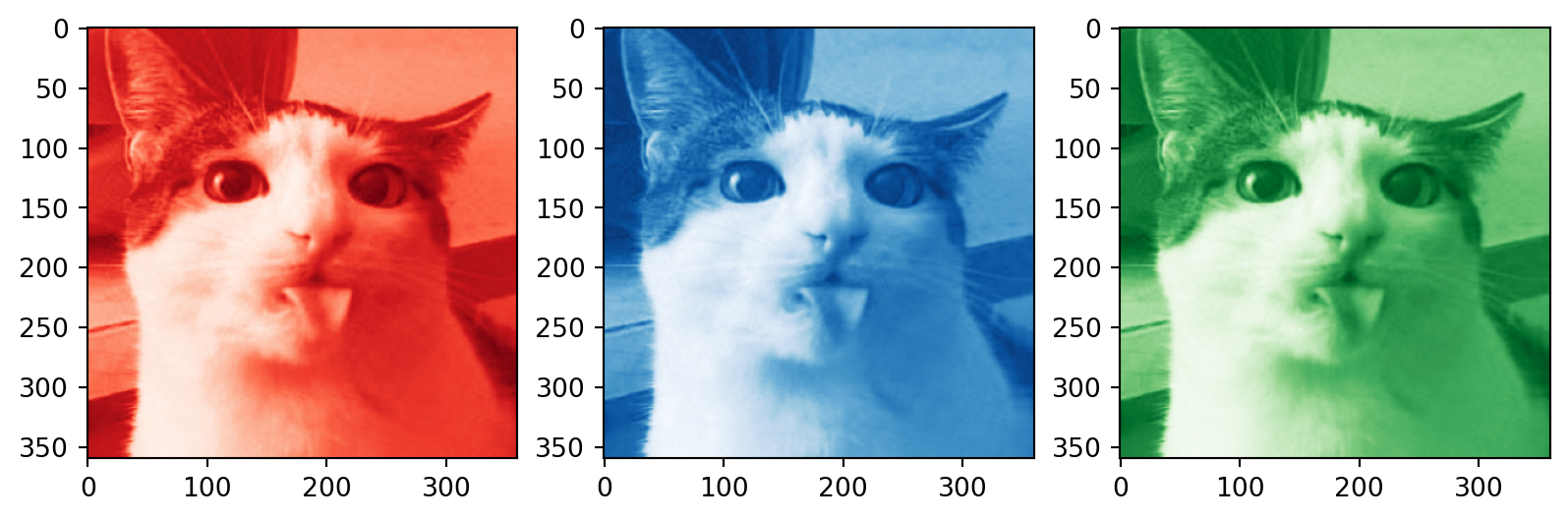
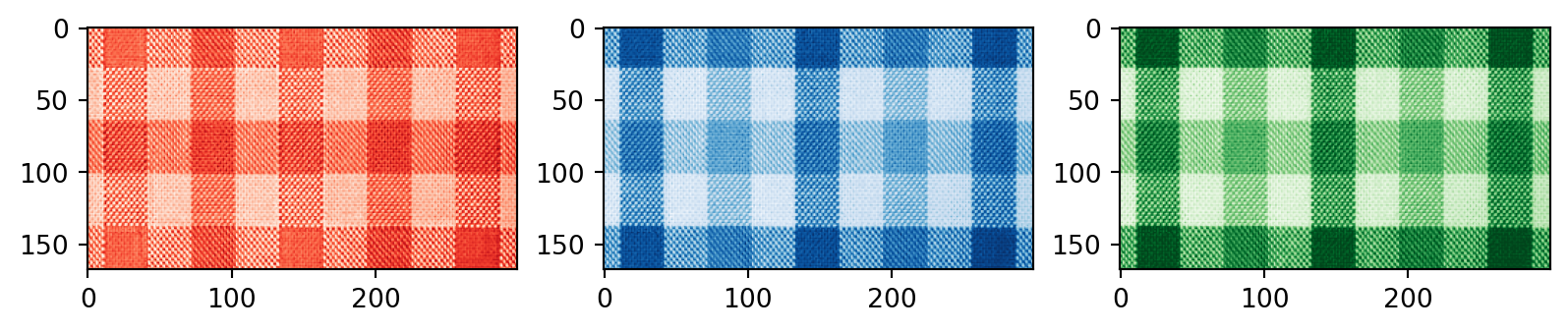
# Plotting the compressed RGB channels
plt.subplot(1, 3, 1)
plt.imshow(R_compressed, cmap='Reds_r')
plt.subplot(1, 3, 2)
plt.imshow(B_compressed, cmap='Blues_r')
plt.subplot(1, 3, 3)
plt.imshow(G_compressed, cmap='Greens_r')
plt.show()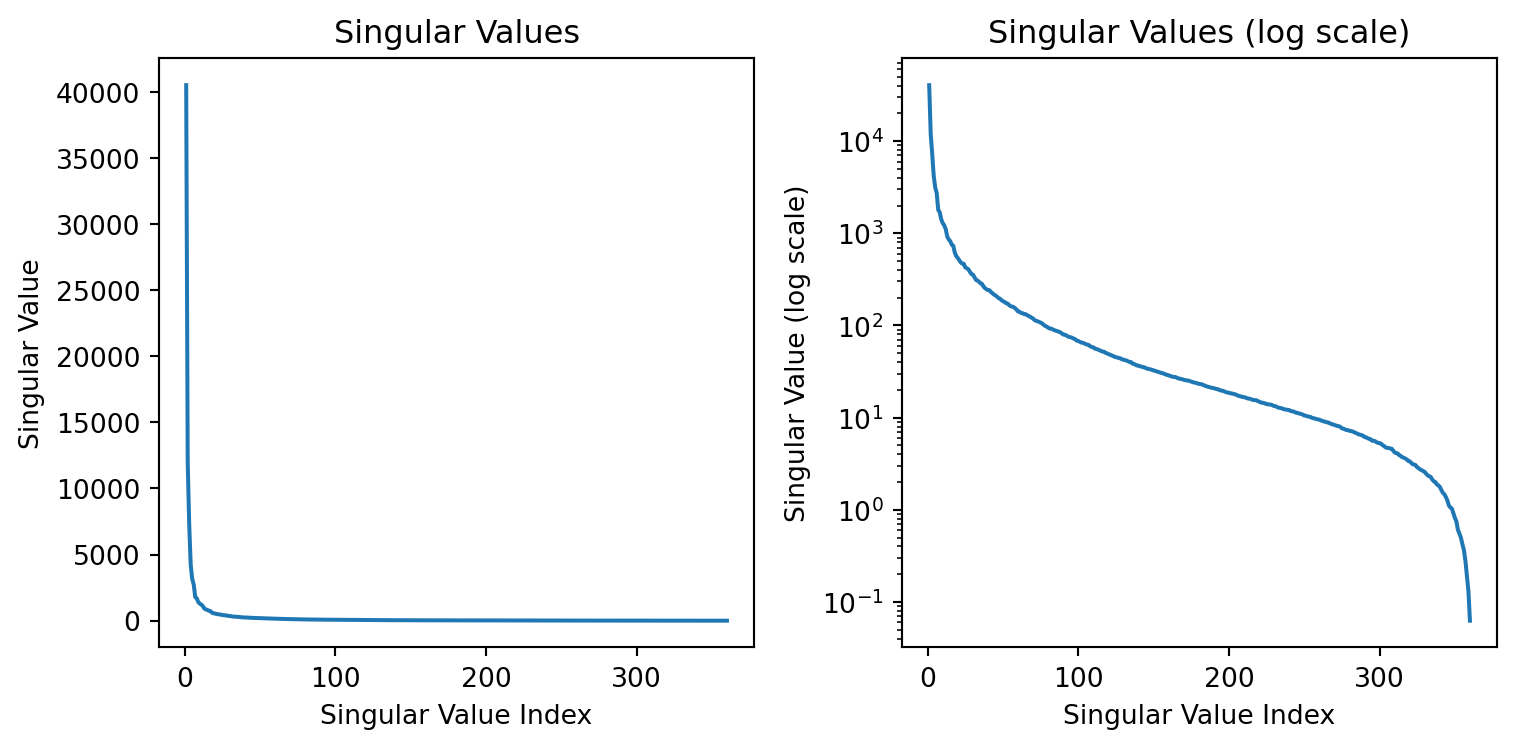
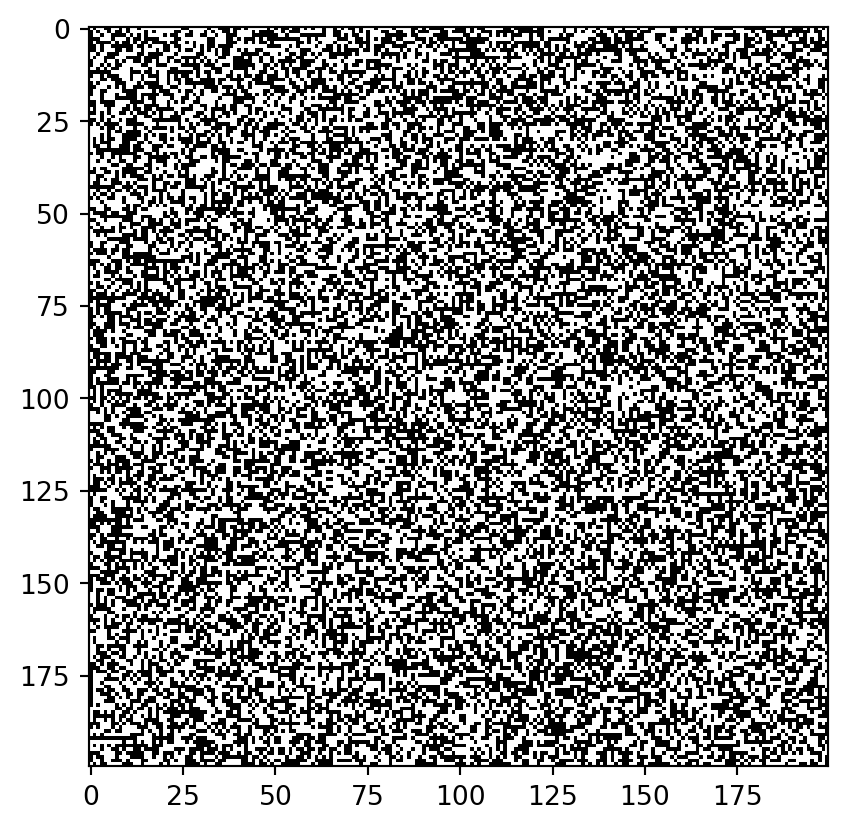
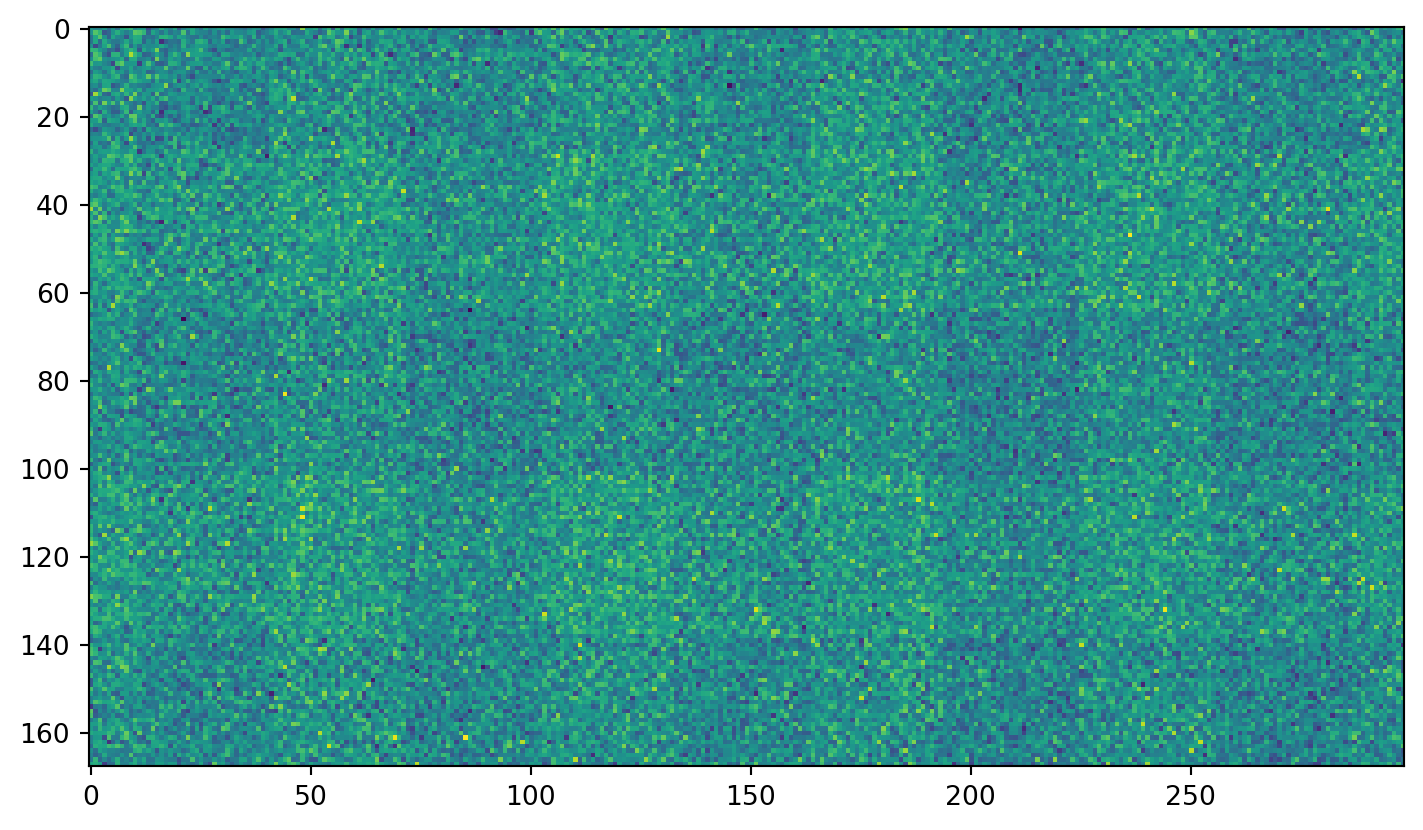
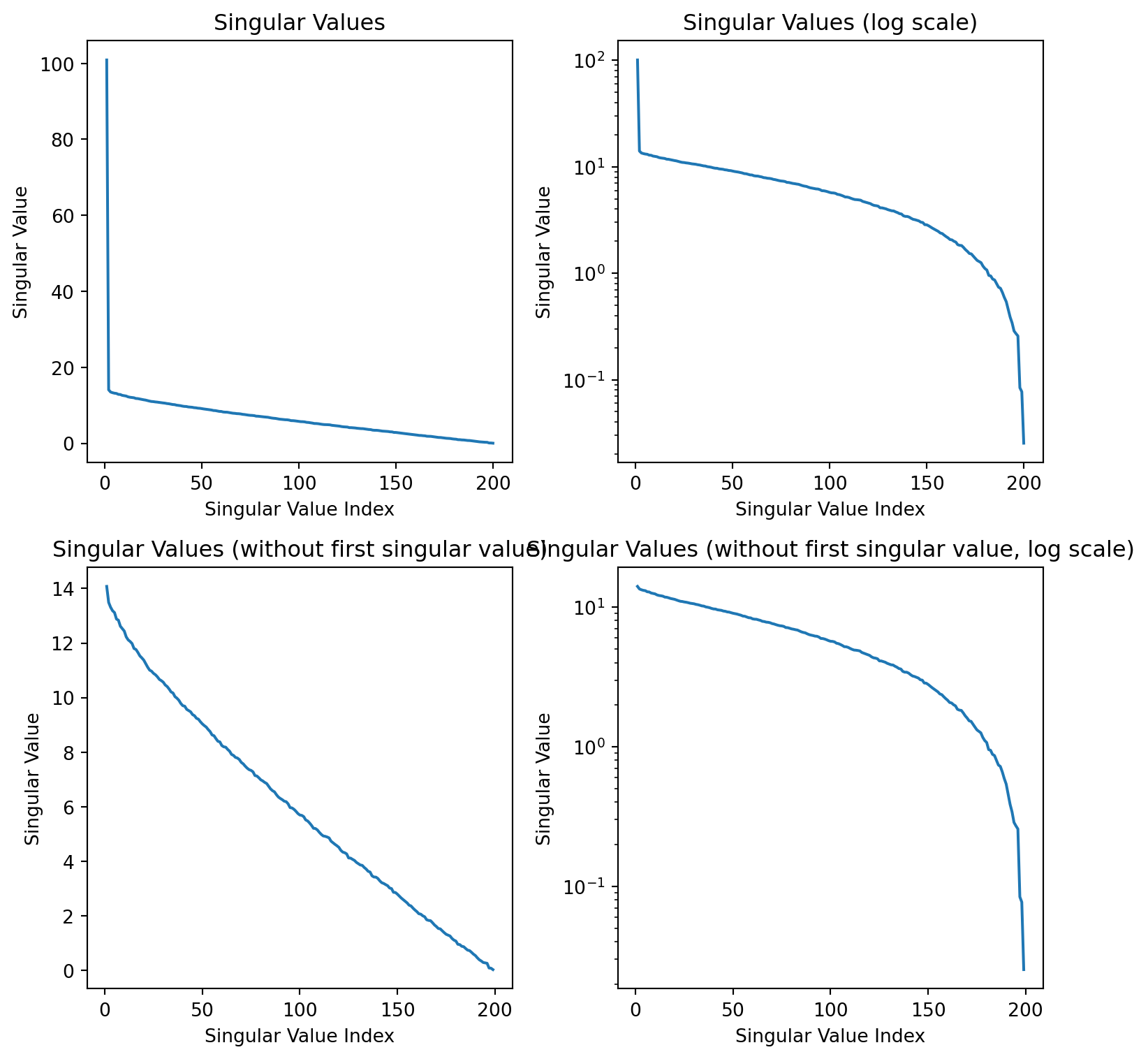
Just plain noise:
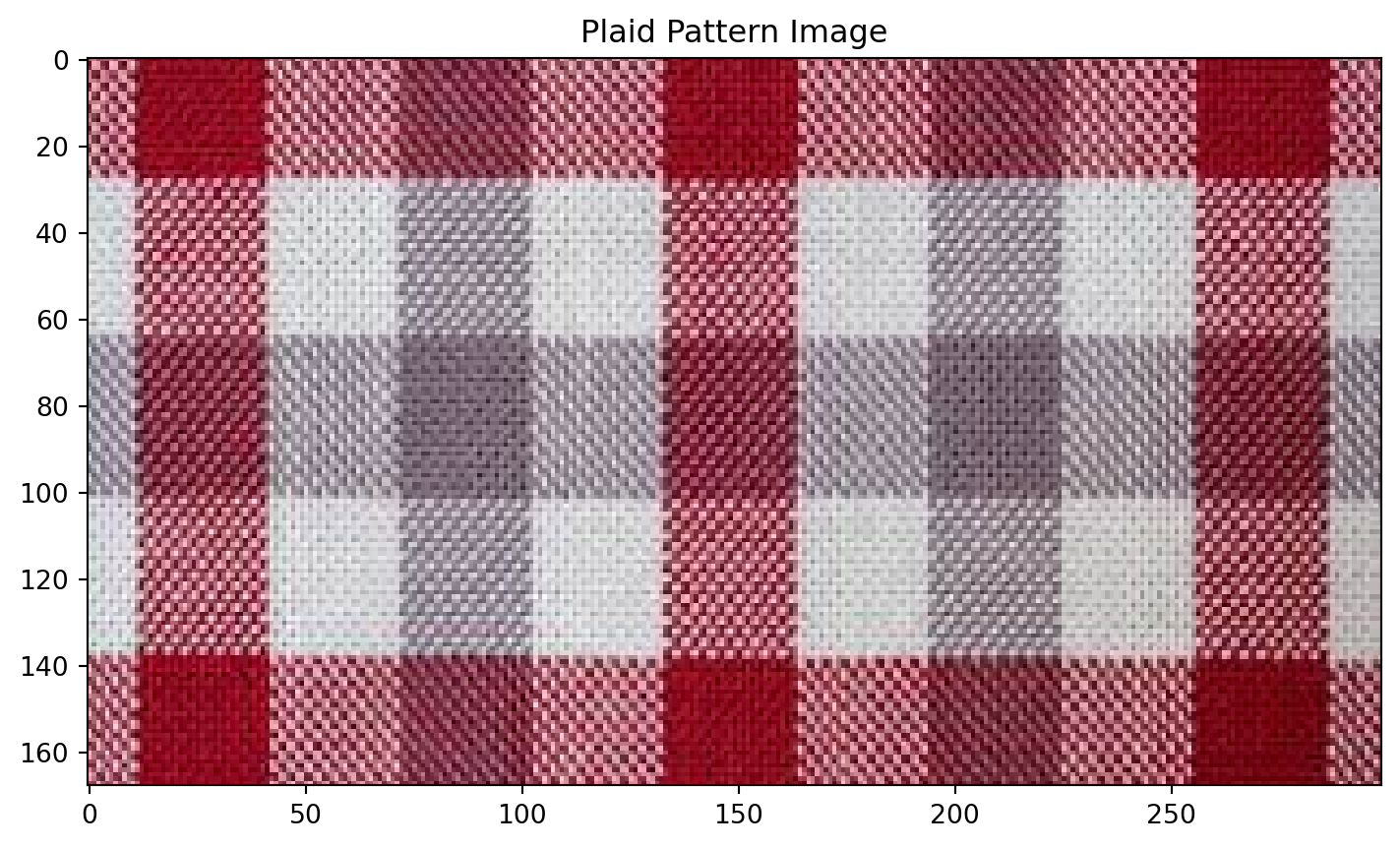
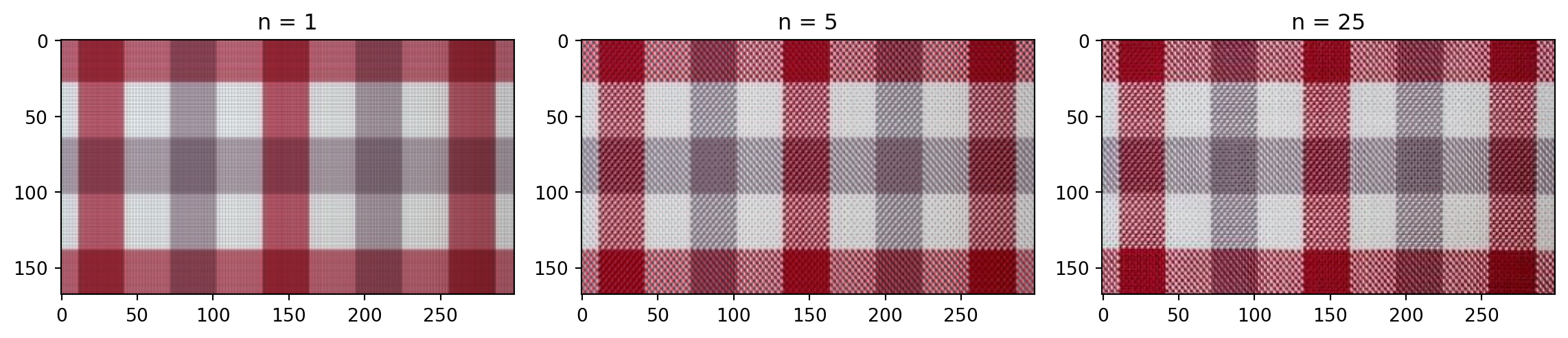
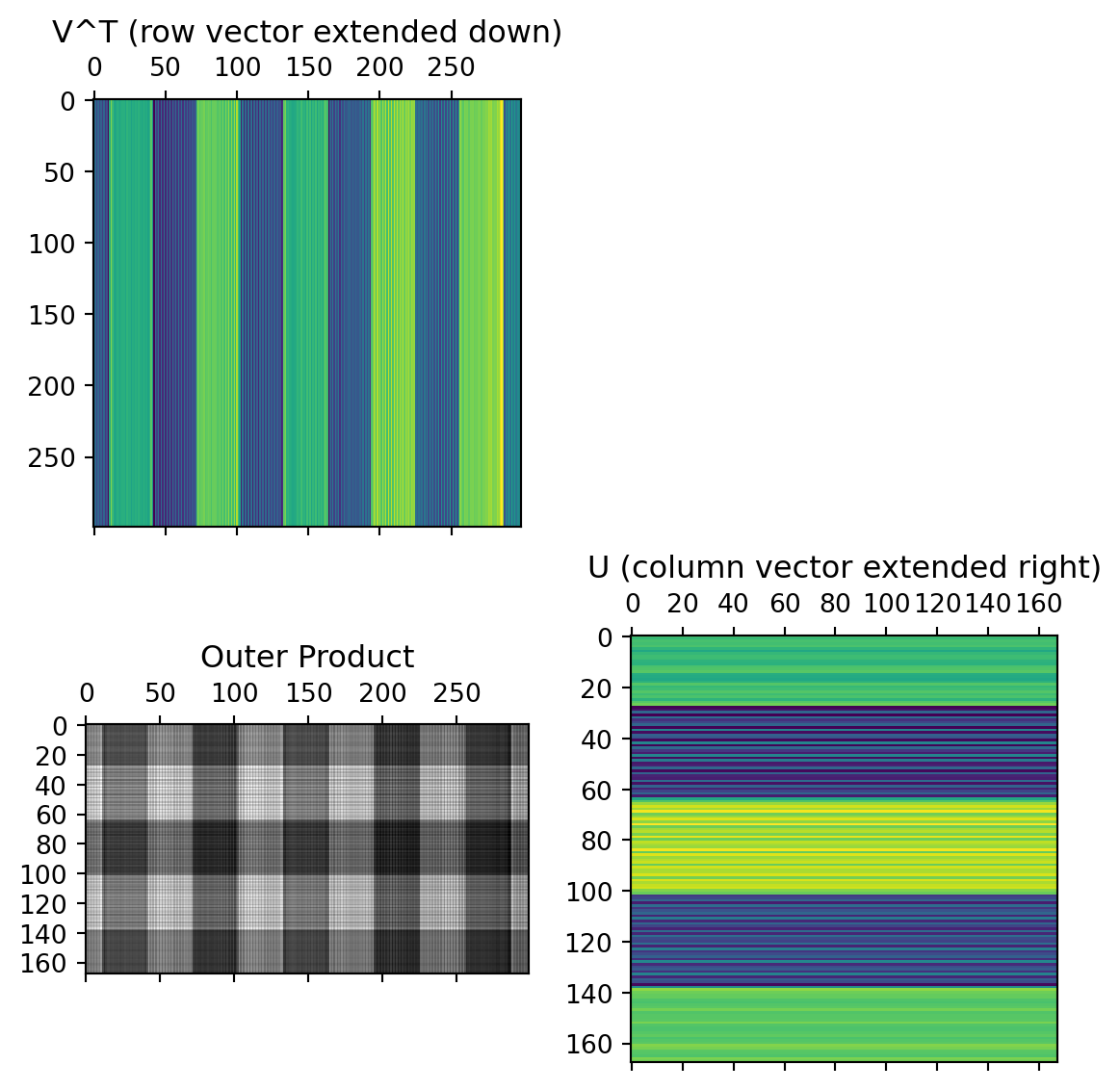
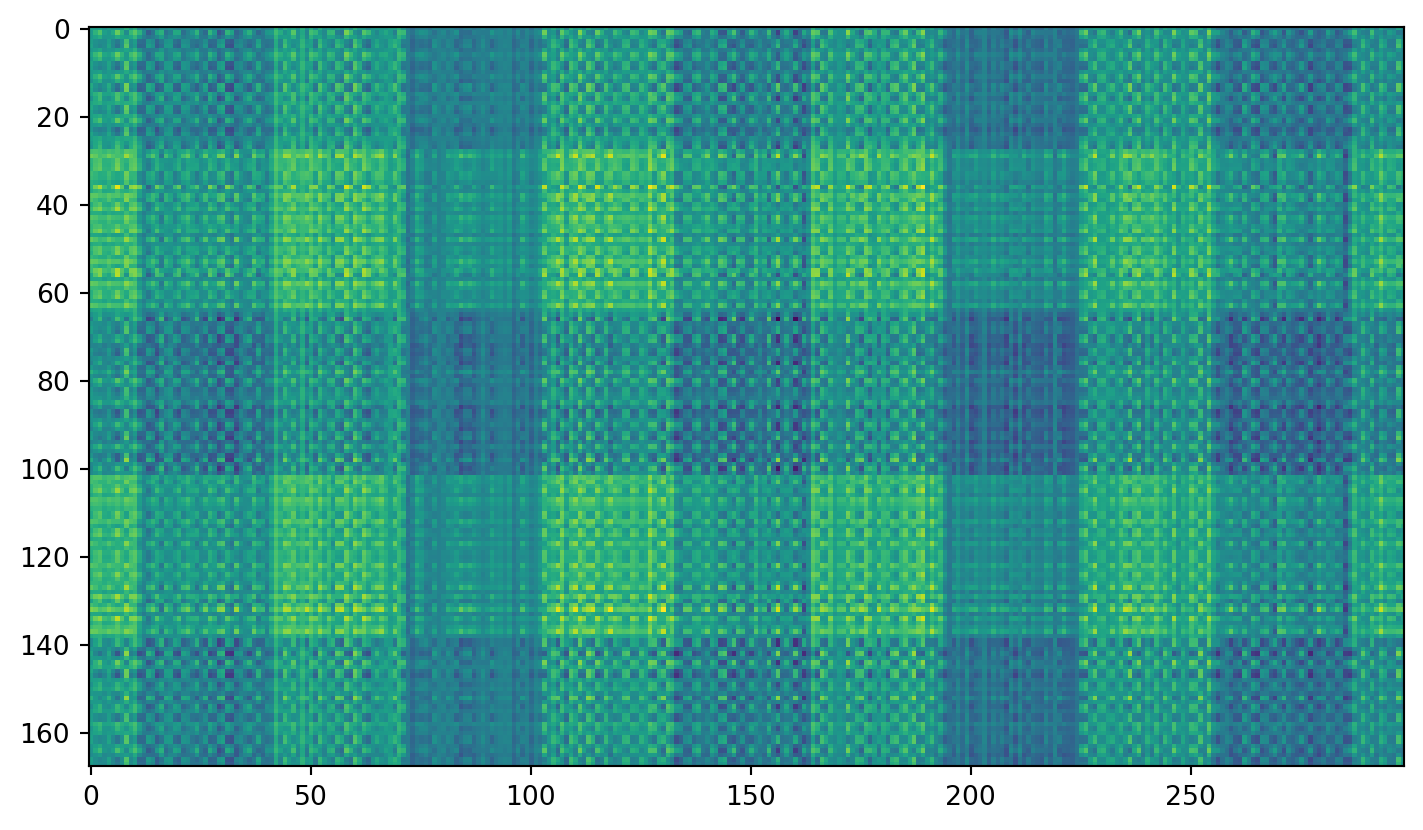
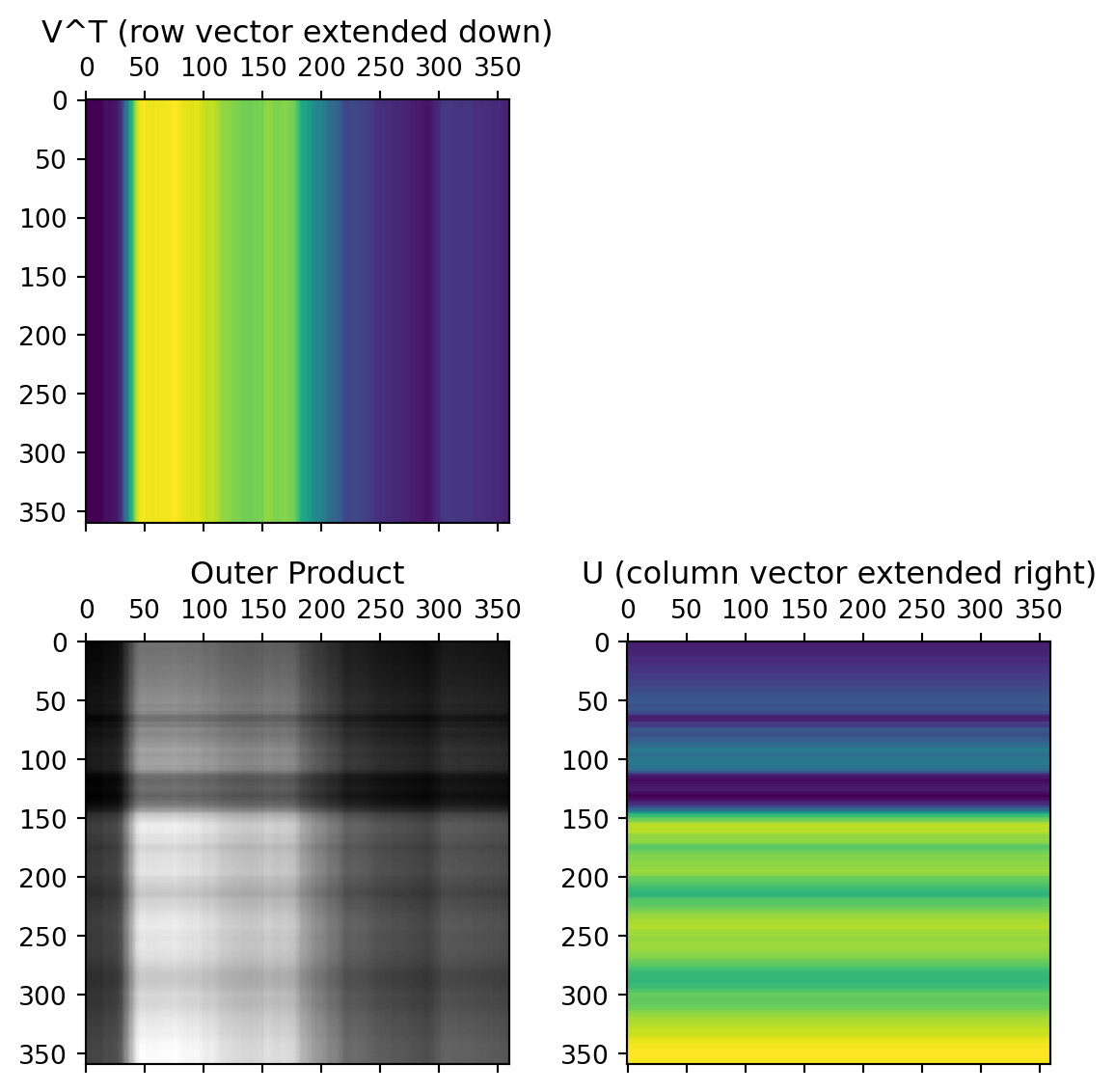
First component:
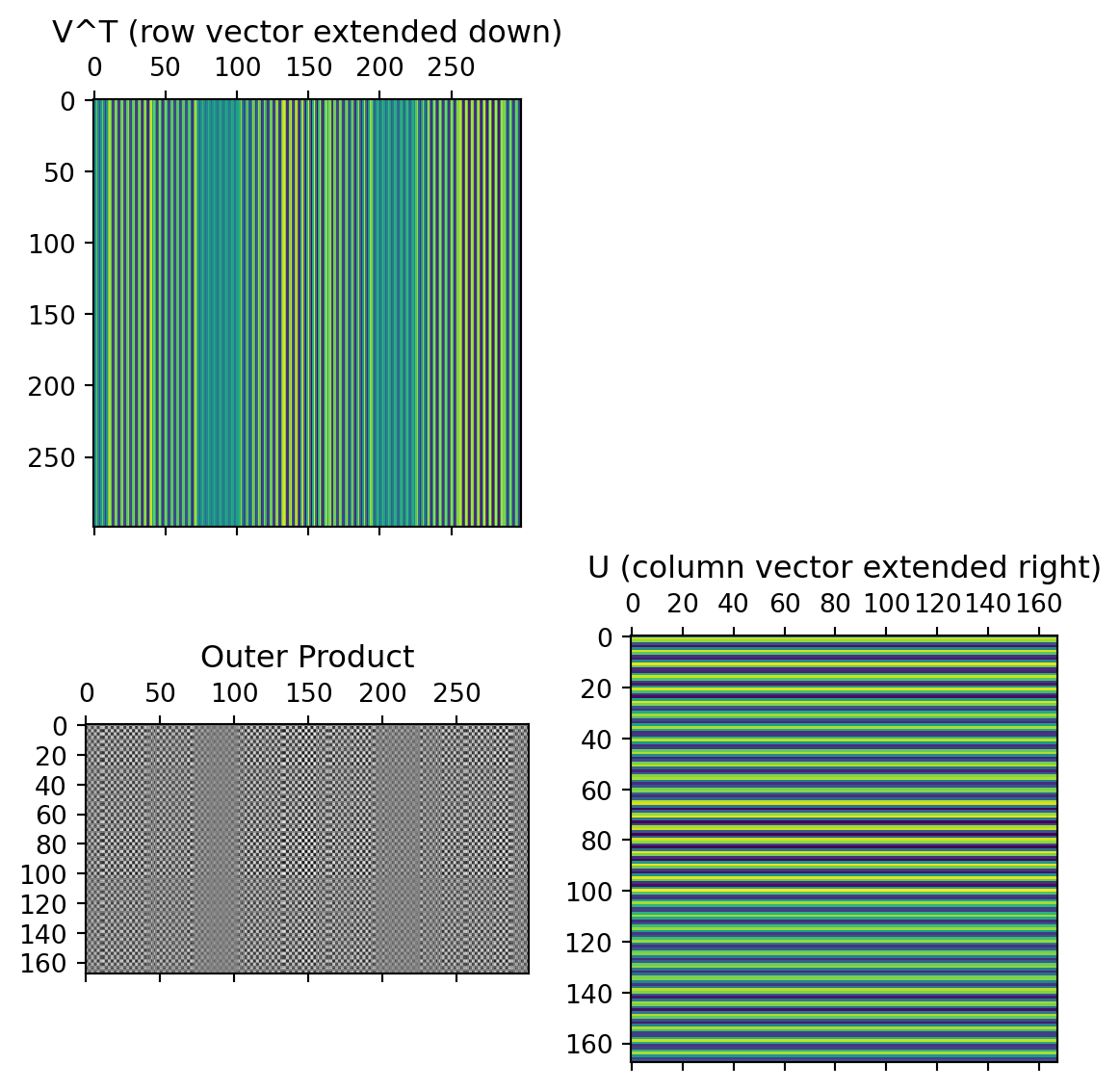
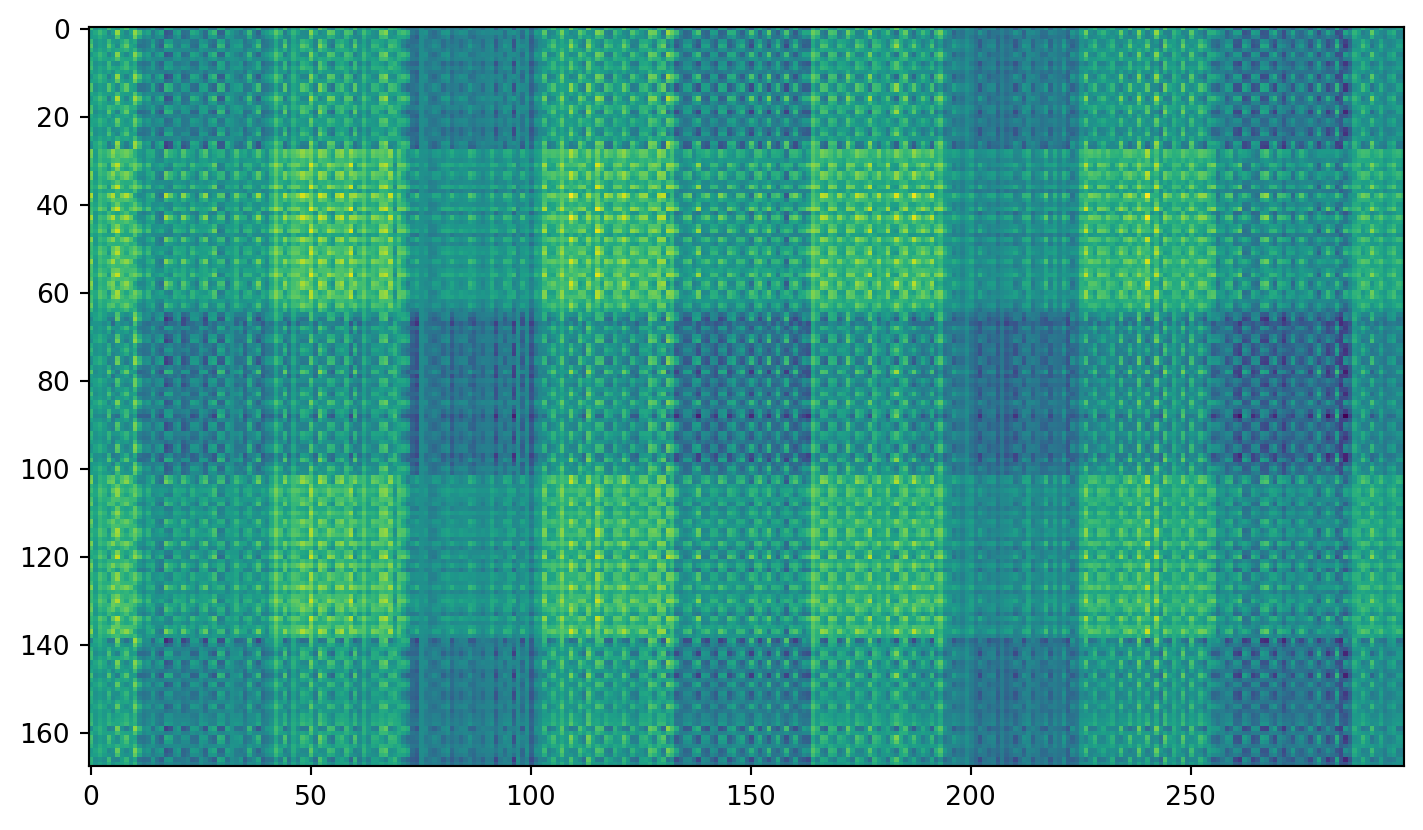
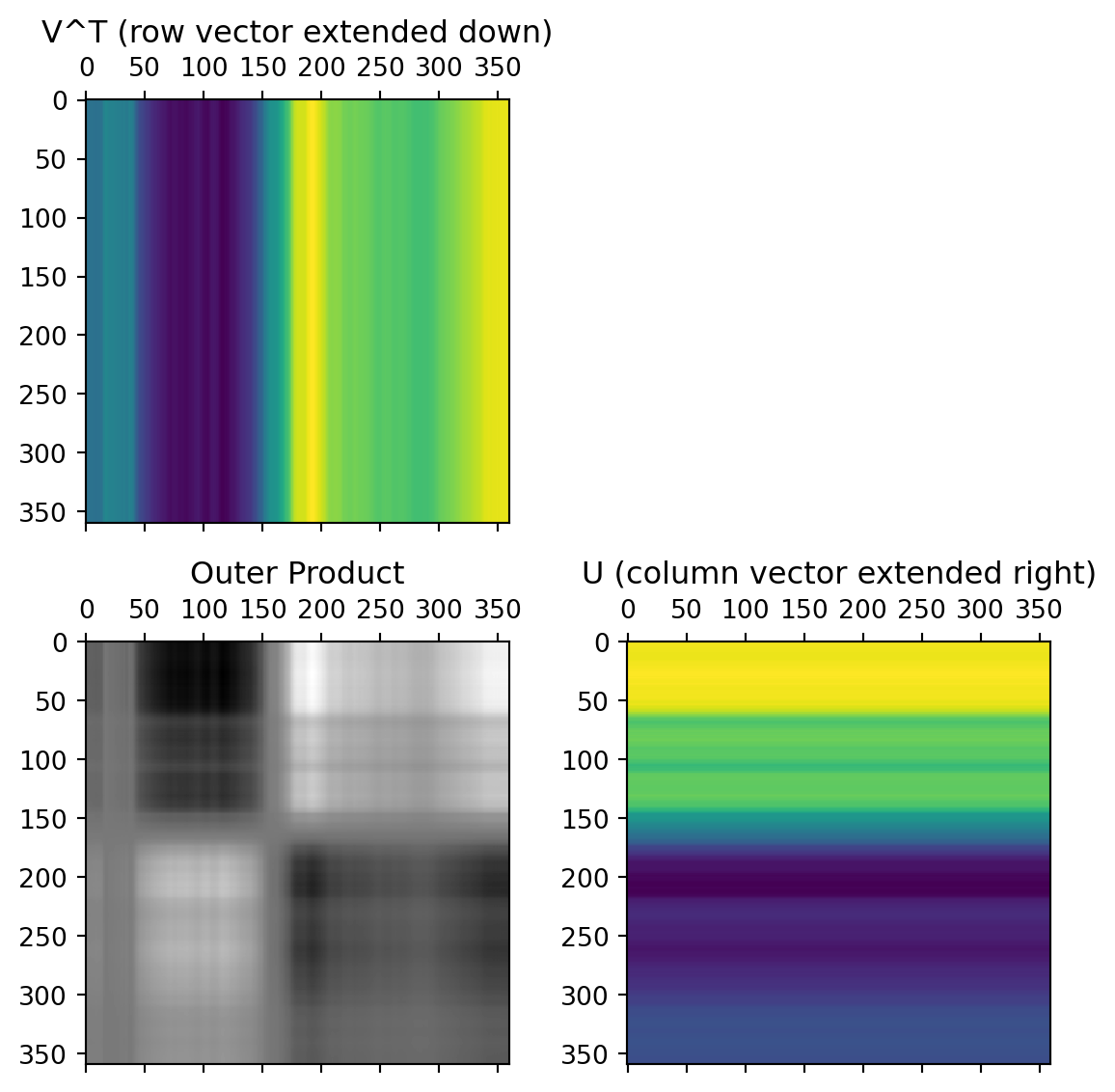
Second component:
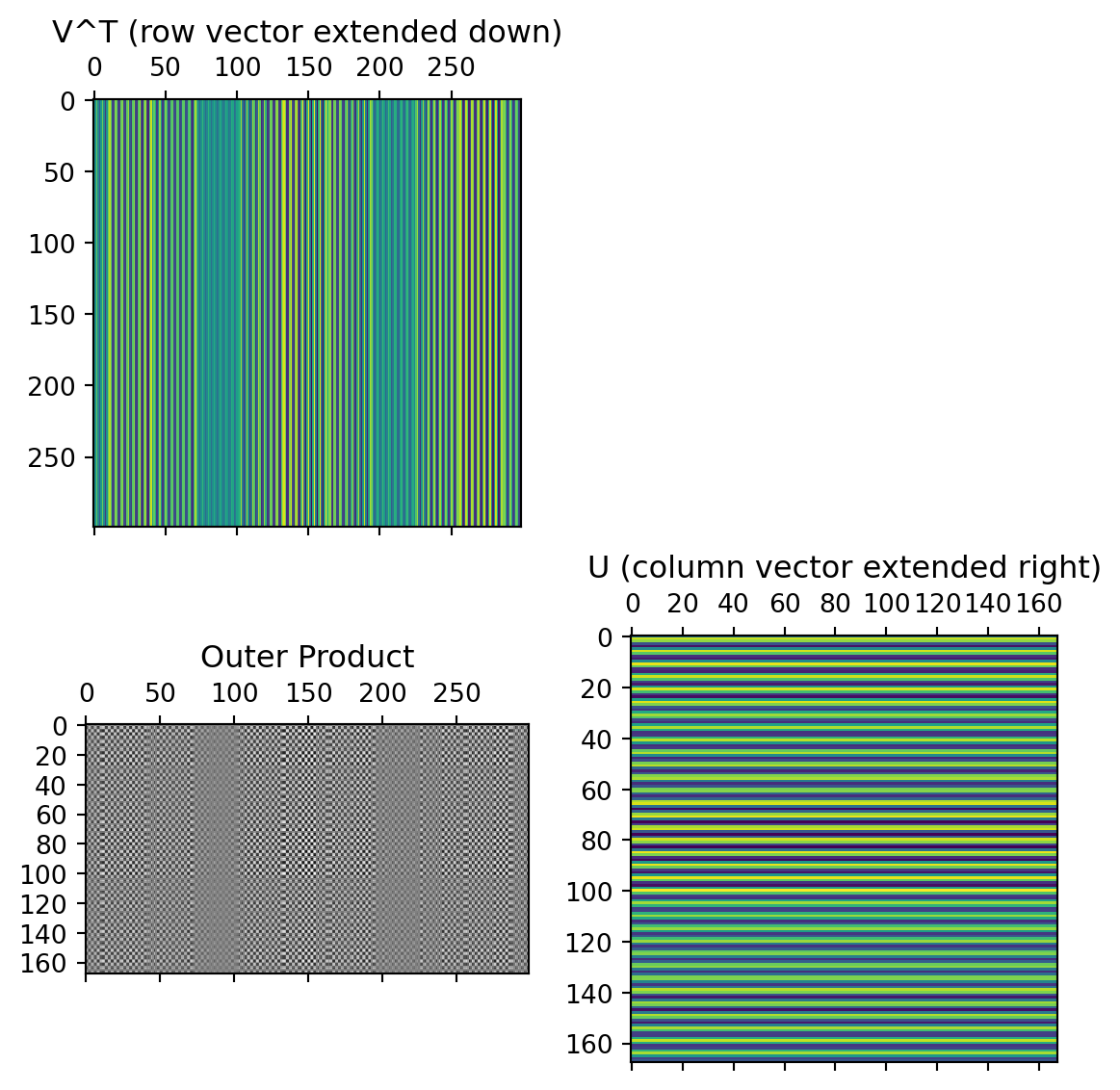
This is just an easier way to implement taking these first few components…
from sklearn.decomposition import PCA
pca = PCA(n_components=2)
pca.fit(R) # fit the model -- compute the matrices
transformed = pca.transform(R) # transform the data
print(f'The shape of the image is {R.shape}, and the shape of the compressed image is {transformed.shape}')
plt.imshow(transformed.T)
The shape of the image is (168, 299), and the shape of the compressed image is (168, 2)
Try adding noise…
Now clean it up with PCA:
from sklearn.datasets import fetch_lfw_people
faces = fetch_lfw_people(min_faces_per_person=60)


# display a few of the faces, along with their names
fig, ax = plt.subplots(3, 4)
for i, axi in enumerate(ax.flat):
    axi.imshow(faces.images[i], cmap='bone')
    axi.set(xticks=[], yticks=[],
            xlabel=faces.target_names[faces.target[i]])

print(f'The shape of the faces dataset is {faces.images.shape}')
The shape of the faces dataset is (1348, 62, 47)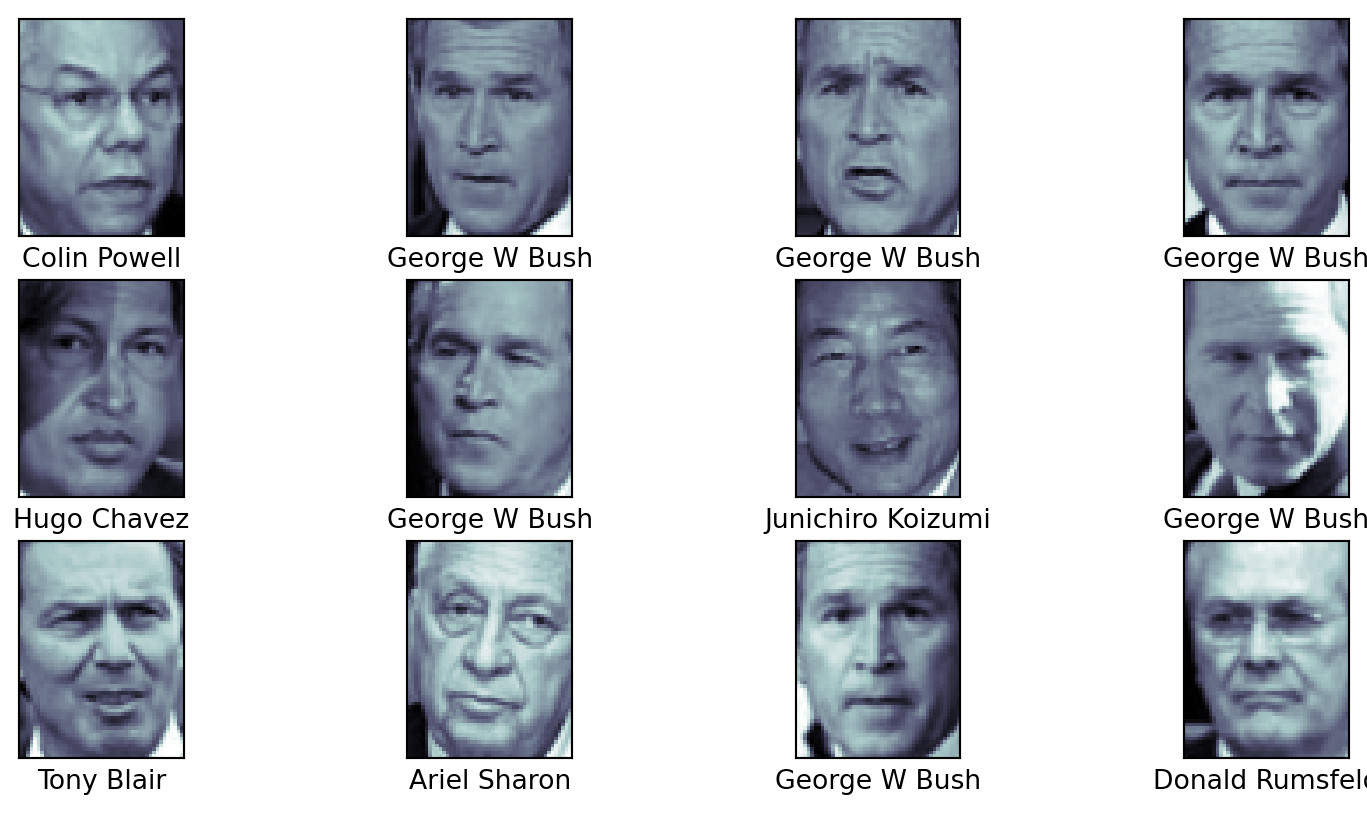
PCA(n_components=2, random_state=42, svd_solver='randomized')In a Jupyter environment, please rerun this cell to show the HTML representation or trust the notebook.
PCA(n_components=2, random_state=42, svd_solver='randomized')
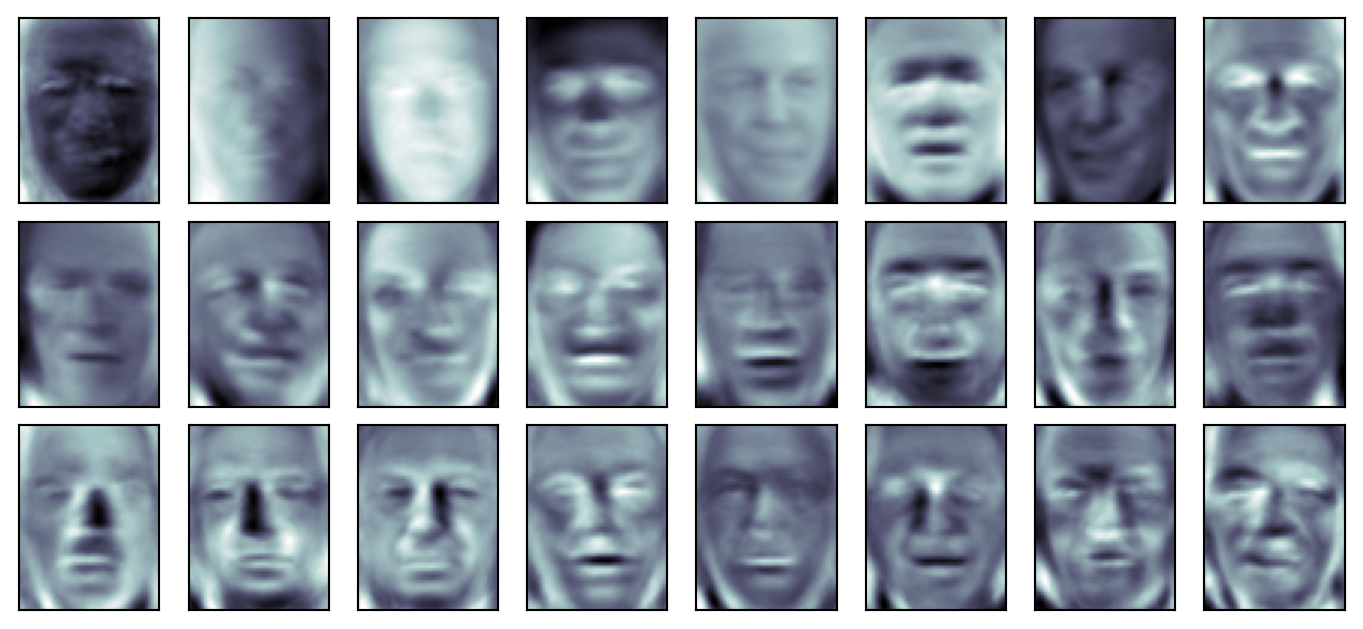
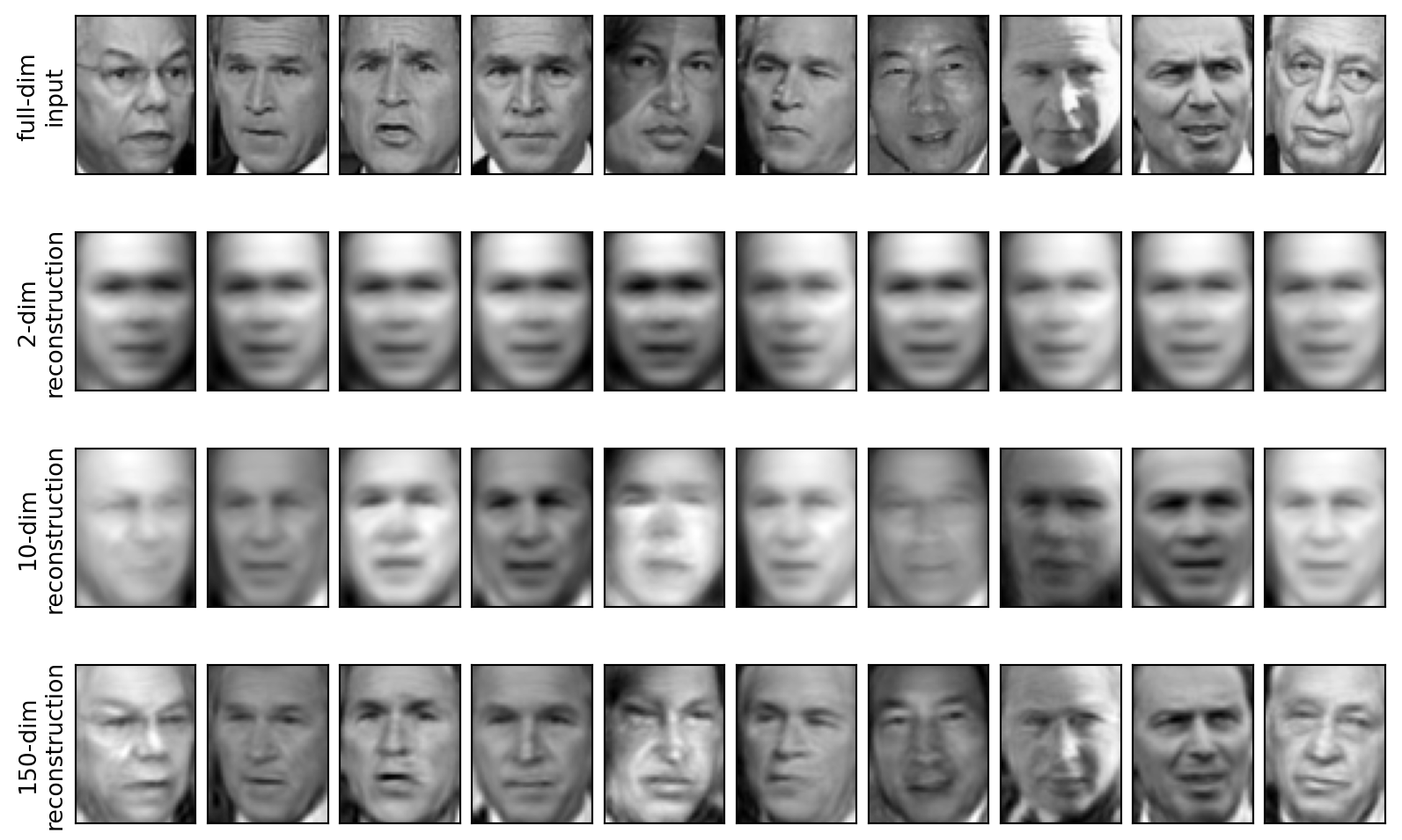
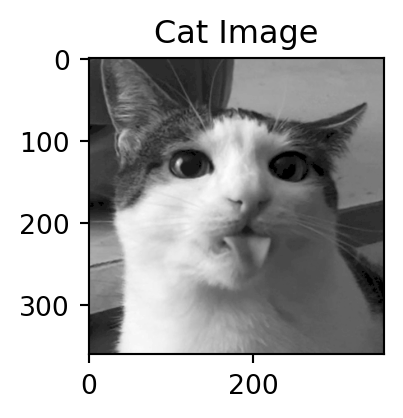
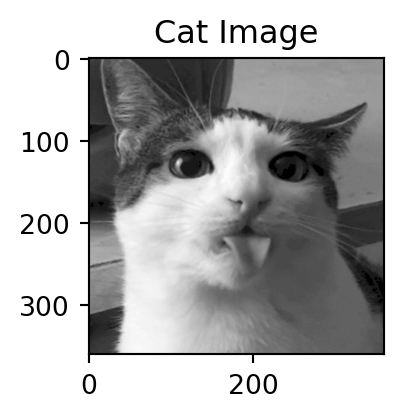
Code up your own image compression using SVD and show the left and right singular vectors, the singular values, and the reconstructed images.
Share with the class!